Sorry, you need to enable JavaScript to visit this website.
Skip to content

Our new funding pledge to enable gender equality

As part of The Equal Sport Project, we've committed to move to a future position where our public funding decisions prioritise equality for women and girls involved in sport and physical activity.

10th November 2026

Today we’ve set out our intention to work with the sport and physical activity organisations we fund to ensure gender equality is at the heart of how they’re run.

Along with UK Sport, we've published a new pledge which recognises that women and girls still face significant inequalities across all areas of the sporting system – from community and school sport right up to the highest levels.

The pledge is part of The Equal Sport Project, an unprecedented cross-sector initiative to make the UK the world's leading nation for women and girls in sport.

Our pledge

"UK Sport and Sport England will work with our funded partners to ensure their governance is designed by men and women, for men and women. 

"If this cannot be demonstrated, we will work with them to implement a credible plan for change."

The Equal Sport Project is uniting sport in the UK behind five shared ambitions to accelerate progress towards equality for women and men across sport – from local leisure centres to the biggest stadiums, and from grassroots pitches to boardrooms.

Our chief executive, Simon Hayes, said that while the sector has taken great strides towards a more equitable future, we must continue to work together to achieve more for women and girls.

"While we’ve made real progress, too many girls and women still face barriers that prevent them from taking part in sport, staying in sport and reaching their full potential," he said.

"We’re excited to be part of the Equal Sport Project and to be helping turn its ambition into action. No single organisation can solve these challenges alone, and this has to be a collective effort. 

"By coming together around five shared priorities, we can create a sporting system that is fairer, more inclusive and better for all women and girls."

Major sporting organisations from all parts of the UK sporting landscape – including the Football Association, Rugby Football Union, Rugby Football League, Youth Sport Trust, England Netball, Lawn Tennis Association, Women’s Sport Trust, Women in Sport and Team GB – have published their own pledges to act and help deliver the project's ambitions.

The Equal Sport Project's five priorities

The project has identified five specific areas where collective leadership, investment and action will have the greatest impact and calls on the entire system to align behind them:

  • Equal access to sport for girls in school.
  • Equal relevance, reach and revenue for women's sport.
  • An equal workforce across sport.
  • Governance structures redesigned for equality.
  • Equal access to sports facilities.
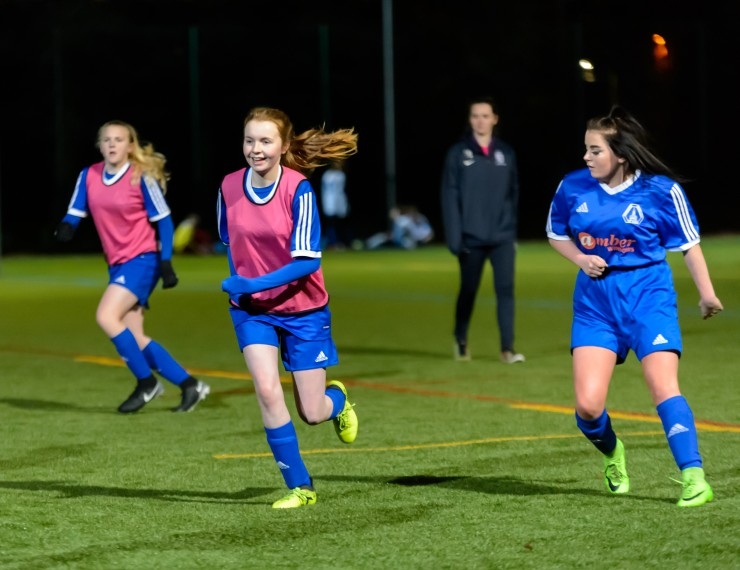
Girls wearing football bibs take part in a training session on an outdoor artificial pitch at night.

Why this is needed

The momentum of women and girls' sport has never been stronger: participation is growing, audiences are growing and investment is accelerating. But progress remains deeply uneven.

Our latest Active Lives survey results show that less than half (46%) of girls meet the recommended levels of physical activity, compared to over half (52%) of boys. For adults in England, a stubborn gender activity gap persists, with half a million fewer active women than men. 

A report this year by the Youth Sport Trust highlighted gendered attitudes are increasing, with 41% of boys agreeing some sports are for boys.

The same organisation points out that while nearly two-thirds (64%) of girls want to be more active, confidence, body image, unequal facilities and gender stereotypes continue to present barriers to participation.

Elsewhere, according to research published earlier this year by Sporting Insights, fewer than 1% of women working in sport believe gender equality has been achieved across the industry, while more than half believe they are paid less than men for carrying out the same role.

And the Women’s Sport Trust says that women's sport also continues to receive a disproportionately small share of media coverage, accounting for around 9% of sports coverage on key channels and 8% of prime-time sports coverage.

"By coming together around five shared priorities, we can create a sporting system that is fairer, more inclusive and better for all women and girls."

Simon Hayes

Chief executive, Sport England

An untapped opportunity

Greater access to sport can help improve health, wellbeing, confidence and social connectedness for women and girls across the country, helping provide the life-changing opportunities that sport can give them.

Beyond that, the rapid growth of women's sport represents one of the UK's most significant untapped economic, social and reputational opportunities. 

Growing audiences, investment, participation, events and innovation are creating new markets, jobs and opportunities across the sector. 

By establishing itself as the world's leading nation for women and girls in sport, the UK can strengthen its position as a global destination for sporting events, media, talent and investment.

Further reaction

Stephanie Peacock, Sports Minister

"We have seen progress in women and girls' sport, but there is still a long way to go.

"Like The Equal Sport Project, this government is backing women's sport at every level, from hosting the 2027 Tour de France Femmes Grand Départ and bidding to host the 2035 FIFA Women's World Cup, to investing £400 million in grassroots sport facilities, doubling priority access to football pitches for women and girls and chairing the Women's Sport Taskforce.

"We will work closely with The Equal Sport Project and encourage all organisations to get involved. Together we can make the UK a world leader in women and girls' sport."

Sally Munday, chief executive of UK Sport

"The UK has shown what is possible when we invest in women and girls' sport.

"Our athletes and teams are inspiring millions, audiences are growing, and women's sport has become one of the most exciting opportunities in the global sporting landscape. 

"But we cannot stand still. While much has been achieved, and despite what some may say, the journey towards equality in sport is far from complete.

"If we want the UK to become the world's leading nation for women and girls' sport, we need to continue working together across the whole system.

"The Equal Sport Project is an important collective commitment to ensure we build on our strengths, challenge the barriers that remain and create lasting change for future generations."

Baroness Sue Campbell, chair of England Netball

"Women's sport has reached a defining moment. We have seen extraordinary progress over the past decade, but we know that equality will not happen by accident.

"It requires leadership, ambition and a willingness to redesign the system so that women and girls are considered from the very beginning, not as an afterthought. 

"The Equal Sport Project is about more than recognising the challenge; it is about committing to action together. 

"If we get this right, the UK can become the best place in the world for every woman and girl to play, compete, coach, lead and thrive in sport."

Find out more

Any organisation with an interest in the future of women's sport in the UK is invited to join The Equal Sport Project and make a measurable commitment towards at least one of its five ambitions over the next two years.

The Equal Sport Project

Sign up to our newsletter

You can find out exactly how we'll look after your personal data, but rest assured we'll only use it to make sure you receive our newsletter, to understand how you interact with our newsletter, and to provide administrative information about our newsletter.