

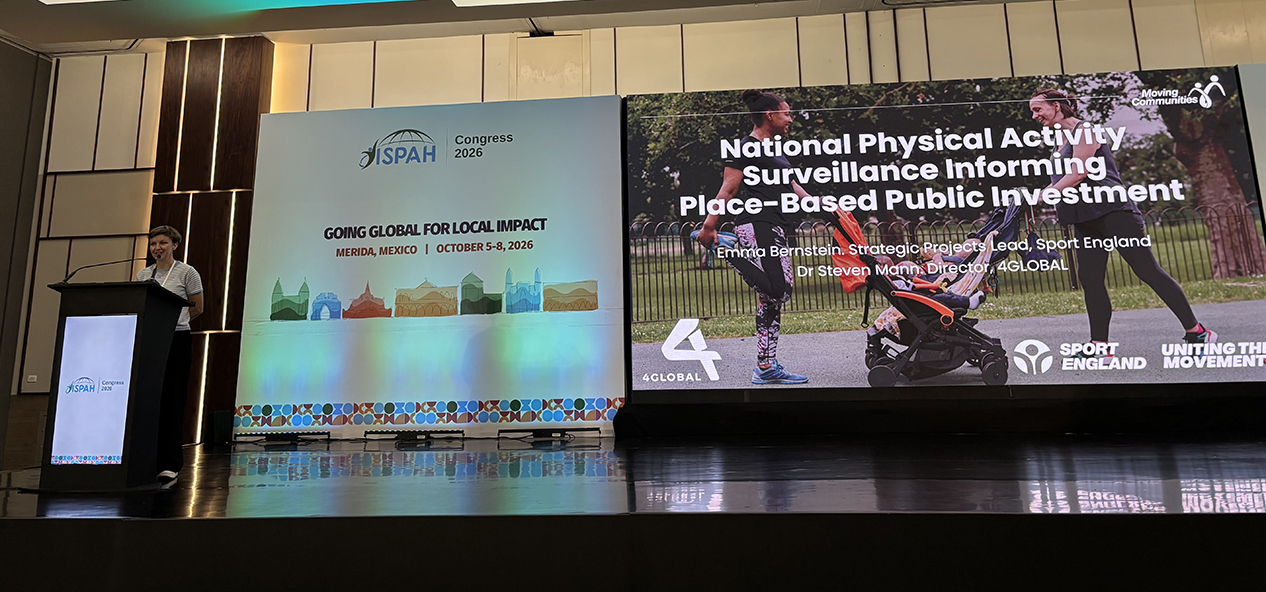
It was a privilege for Sport England and 4GLOBAL to be invited by the International Society of Physical Activity and Health to share the Moving Communities story at its global conference in Mérida (Mexico) last month.
Presenting on the international stage marked a significant milestone for a service that began six years ago.
Knowledge is power (and clarity)
The occasion was also a powerful endorsement of the collaborative approach that has united a wide range of partners across the sector behind a shared ambition – to demonstrate the value and impact of sport and physical activity through data and insight.
For those unfamiliar with it, Moving Communities is a national data and insight platform that helps organisations understand who is taking part in sport and physical activity, who is missing out and what difference investment is making.
By bringing together data from multiple sources into a consistent framework, partners are able to get a clearer picture of need, impact and inequalities, helping them make better decisions about where to invest resources and how to maximise outcomes for communities.
Our presentation showcased how a common data framework has created a step change in the way sport and physical activity are understood, measured and valued.
Furthermore, by bringing together multiple disparate datasets into a single evidence base, Moving Communities has helped unlock investment, strengthen business cases and influence funding decisions at both local and national levels.
It’s great to see that what began as a programme focused primarily on public leisure facilities has evolved into something much broader.
Today, Moving Communities supports place-based approaches, informs strategic decision-making and enables a growing range of stakeholders, including local authorities, national governing bodies, active partnerships and other sector organisations.
Backing decisions for the betterment of all
The aim? To better understand and evidence their contribution to increasing physical activity and reducing inequalities.
The response from delegates was overwhelmingly positive, with representatives from several countries highlighting the scale and maturity of the programme, and recognising it as a model they aspire to replicate.
It also stimulated discussion around the adoption of national data standards and the power of social value.
Our presentation reflected the conference theme of 'Going Global for Local Impact', demonstrating how Moving Communities enables partners and programmes to evidence their contribution to a much bigger national story.
It illustrated how robust, consistent data can empower organisations to tell compelling stories about impact while supporting strategic investment where it is needed most.