Skip to content

Moving Together

As the Moving Together programme starts its second phase, the faculty of sport and exercise medicine's president talks about how this initiative, supported by us, is helping those with long-term conditions to be active.

6th July 2026

by Dr Natasha Jones
President, faculty of sport and exercise medicine

Health care professionals and those in physical activity alike recognise the considerable benefits of movement as medicine.

For too long, people who stand to gain the most from increasing their physical activity have been faced with systemic barriers that serve to undermine their confidence and autonomy.

These barriers are not rooted in evidence, so addressing them requires a collaborative, system-wide response shaped by the voices and lived experiences of those with long-term health conditions.

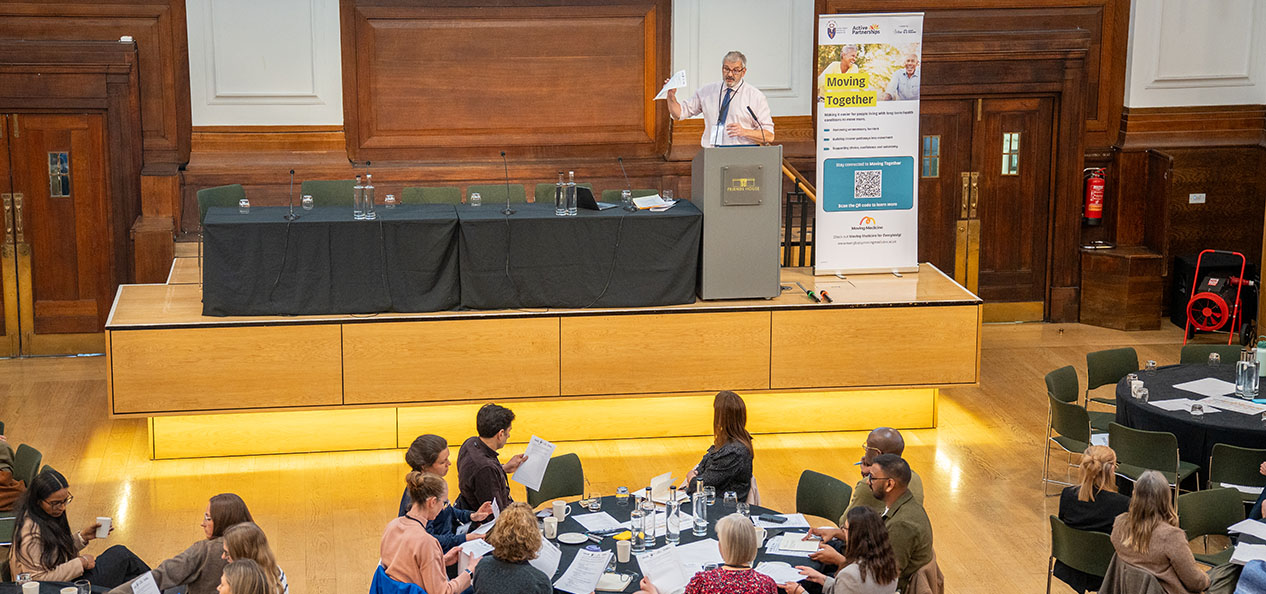
A man gives a presentation from a lectern to an audience seating around round tables in an indoors venue where there's also a Moving Together banner.

That’s exactly why Moving Together was created: a cross-sector initiative focusing on integrating physical activity into health and care, by creating frictionless pathways between health and physical activity, and by removing barriers associated with risk.

Launched in 2025, it is co-led by the Active Partnerships National Organisation and the Faculty of Sport and Exercise Medicine UK, and it's been supported and funded by Sport England through the National Lottery

Our ambition is to establish frictionless physical activity pathways to create an integrated system that offers proportionate support, enabling people living with long-term health conditions to develop the skills and confidence to build activity into their lives in ways that work for them. 

The importance of tackling this across sectors 

To achieve this aim, we are working across multiple sectors so that we can:

  • build and develop local areas where people can be active, while considering and meeting the individual needs of each community
  • define national evidence-based standards while learning from pilot models
  • establish and demonstrate a joined-up approach through health, activity practitioners and physical activity sector with brief advice, leading seamlessly to autonomous next steps
  • have impact in areas of health inequality.

Moving from medical clearance to cross-sector guidance

One of the barriers for people with long-term health conditions is risk aversion, but we are tackling this challenge head-on through research and evidence-based assessments that everyone involved can trust.

We want to drive change from mandated medical clearance to patient-centred medical guidance, as and when required, and we want to ensure this policy change is reflected in future physical activity pathway development. 

We’re already one year into this important programme and now we are embarking on our next phase. 

Our ambition is to establish frictionless physical activity pathways to create an integrated system that offers proportionate support, enabling people living with long-term health conditions to develop the skills and confidence to build activity into their lives in ways that work for them. 

A national roundtable conversation

On 14 May, we hosted an inaugural Moving Together National Roundtable in London, gathering more than 100 representatives from healthcare, physical activity, policy, academic, community and lived-experience organisations.

The event marked an important milestone in the Moving Together programme: it provided an opportunity to share progress, to test emerging thinking and to gather cross-sector perspectives on implementation in everyday practice.

Collectively we agreed priority actions across health and physical activity systems, and considered what the next phase of the programme should be.

Key themes we heard

The strongest message emerging from the event was that stakeholders are increasingly moving beyond asking whether physical activity should form part of long-term condition pathways, and are now focused on how implementation can happen consistently, safely and at scale. 

One key insight from the day was that the conversation has shifted from why physical activity matters to how implementation happens in practice.

From it, four key themes emerged: 

  • Workforce confidence – supporting professionals to have confident conversations about physical activity, risk and behaviour change. 
  • Practical implementation – ensuring resources, tools and support mechanisms exist to enable adoption in real-world settings. 
  • System alignment – strengthening connections between healthcare, physical activity providers, community organisations and policy partners.
  • Consistent messaging – ensuring individuals receive clear, evidence-based and empowering messages regardless of where they enter the system.

The discussions highlighted a strong appetite for change, alongside recognition that implementation support will be critical. 

It was also clear that we don't need more evidence that physical activity works and that we now need support to implement it consistently.

What’s next?

The passion and expertise in the room at the roundtable has fuelled our thinking about what’s next.

We know we won’t improve the pathways to help people with long-term conditions to move more without all of us driving behavioural change together, so we’re hosting a 45-minute webinar 'Maintaining Momentum: A Moving Together Update' on Thursday 9 July to keep going with our collaborative approach.

This webinar marks the next step in the Moving Together journey, sharing how feedback from a wide array of stakeholders is already shaping the programme's implementation priorities and future direction. 

I’m excited to be joining my fellow co-leads to share the latest update on how we intend to drive meaningful change, and we hope that people from both the health, care and physical activity sectors will join us to learn more about how they can support this important programme of work.


Sign up to our newsletter

You can find out exactly how we'll look after your personal data, but rest assured we'll only use it to make sure you receive our newsletter, to understand how you interact with our newsletter, and to provide administrative information about our newsletter.